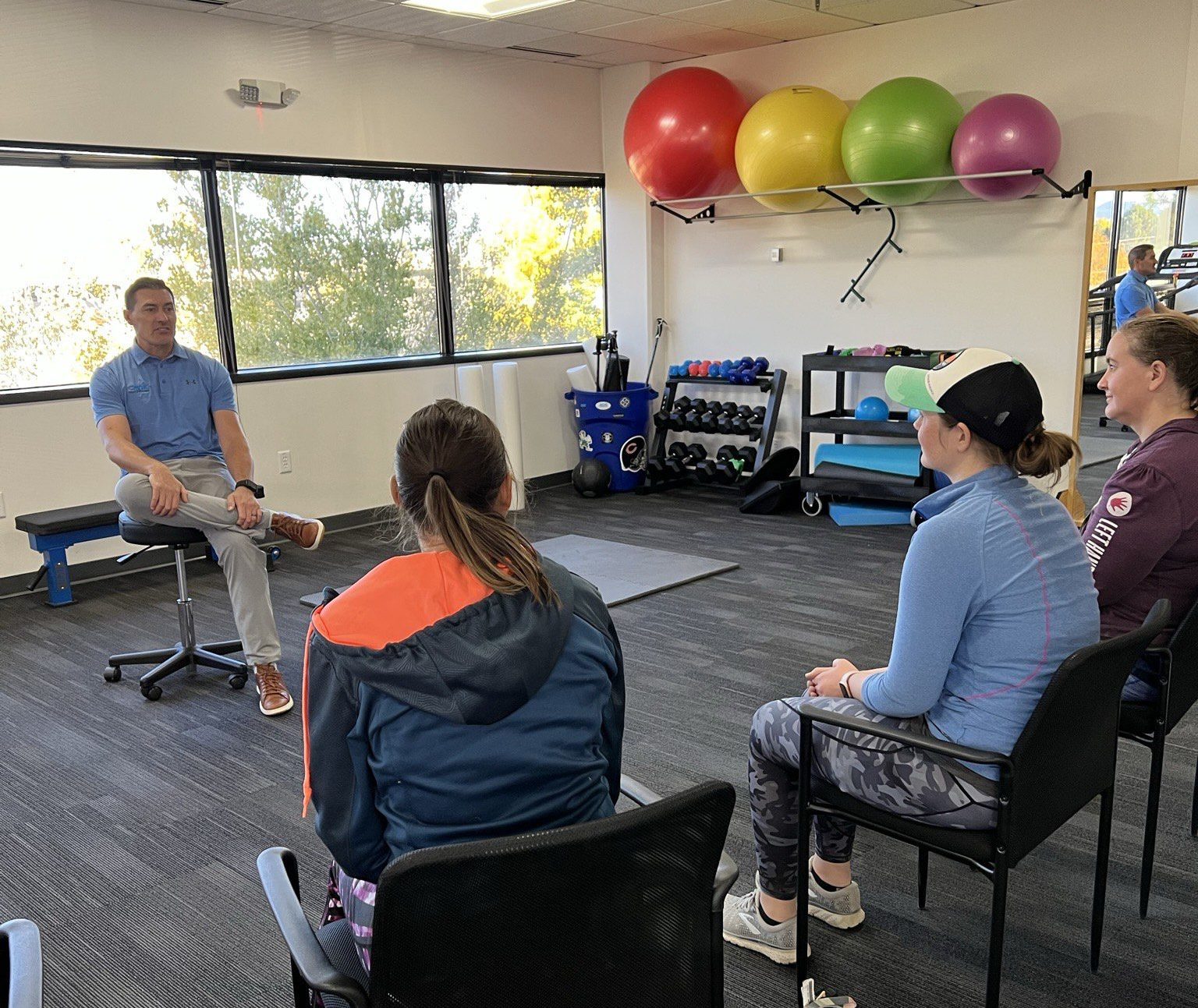
Yes, and many patients are pleasantly surprised by what physical therapy can help with. Some examples include: Balance training and fall prevention Many insurance plans, including Medicare, cover therapy to improve balance and reduce fall risk, even if someone hasn’t had a major injury. Vertigo and dizziness treatment Specialized physical therapy techniques can treat certain types of vertigo, and this is often covered by insurance. Chronic pain management Patients sometimes assume therapy is only for post-surgical rehab, but many plans cover treatment for long-standing back, neck, or joint pain. Strength and mobility after illness or hospitalization Physical therapy can help people regain strength after periods of inactivity, illness, or hospitalization. For many people, therapy isn’t just about recovering from injury: it’s about helping them stay active, independent, and confident in their daily lives.
Epic PT works with many major insurance providers, including: • Medicare • Kaiser • Medicaid • Blue Cross Blue Shield • United Healthcare • Cigna If you’re unsure about your coverage, our team is happy to help check your benefits before your first visit.
At Epic Physical Therapy, we understand that pain and injuries shouldn’t have to wait weeks for care. We offer same-week evaluations at our South Denver locations whenever possible so patients can begin treatment quickly and start feeling better sooner.
Absolutely. Many Medicare patients use physical therapy to treat pain or mobility problems before considering surgery. Physical therapy can often help improve strength, flexibility, and movement patterns, which may reduce pain and help patients stay active without more invasive treatment.
Yes. Medicare frequently covers physical therapy designed to improve balance, strength, and walking stability. Many patients seek therapy after noticing changes in balance, experiencing dizziness, or feeling less confident walking on uneven ground or stairs. Balance therapy can help reduce fall risk and improve confidence with everyday movement.
Medicare often covers physical therapy for conditions that affect mobility, balance, or daily function. Some of the most common reasons Medicare patients come to Epic PT include: • Knee, hip, or shoulder replacement recovery • Back and neck pain • Balance problems and fall prevention • Arthritis and joint stiffness • Shoulder injuries like rotator cuff pain • Foot and ankle injuries • Strength and mobility after illness or hospitalization If a condition makes it harder to walk, move comfortably, or stay active, physical therapy is often recommended.
Medicare does not set a strict visit limit for physical therapy. Instead, coverage is based on medical necessity. Your physical therapist will evaluate your condition, create a plan of care, and document your progress to ensure treatment continues as long as it is helping improve your mobility, strength, or function.
Yes. Medicare patients will need a referral or prescription from their medical provider before beginning physical therapy. If you have seen your provider within the last 30 days, our team can often coordinate the referral directly with their office so you can begin care quickly. If you already have a referral from your doctor, you can schedule right away. Once the referral is received, same-week evaluations are often available.
Most patients with Medicare Part B pay: • The annual Medicare deductible (if it hasn’t been met yet) • About 20% of the Medicare-approved cost for therapy visits Many people also carry a Medicare supplemental or secondary insurance plan, which may cover part or all of that 20%. Our front desk team verifies benefits before your first appointment so you understand your expected cost ahead of time.
Yes, depending on medical necessity and the therapist's plan of care.
After the Part B deductible, Medicare typically covers 80% of approved services.
An initial evaluation is considered your first visit as a patient of our clinic. A free consultation does not count as an initial evaluation. The initial evaluation is a more detailed visit with your physical therapist to determine a plan of care to best treat your condition. Often this includes a conversation about your condition, health history and goals. These visits often include stretches and exercises. Following your initial evaluation, you will work with us to schedule your next visits to help you get back to doing life better.
This depends on your individual needs. You and your physical therapist will develop a treatment plan together. This usually consists of two to three visits per week depending on your condition.
Physical therapists are movement experts who work with patients to enhance quality of life with exercise, hands-on care and education. Physical therapists, after making a diagnosis, create personalized care plans to improve mobility, manage pain and chronic conditions, recover from an injury and prevent future injuries and chronic conditions. Physical therapists treat people of all ages.
Absolutely! We provide treatment services for pediatric therapy and can work closely with your physician, schools and early childhood intervention program. Our therapists have experience working with children of all ages.
Physical therapy, for some conditions, has been found to be as effective as surgery. Consider physical therapy before undergoing expensive and invasive surgeries.
The Centers for Disease Control and Prevention urges health care providers to reduce the use of opioids in favor of safe alternatives for long-term pain management. Physical therapy is a safe alternative. Physical therapy treats pain through hands-on care, movement and education.
Physical therapy can help with a wide variety of symptoms and conditions including but not limited to: ankle and foot pain, arthritis and joint pain, athletic injuries, Carpal Tunnel Syndrome, chronic pain, disc injuries, fall prevention and balance training, fibromyalgia, hand, wrist and elbow pain, headaches, hip and knee pain, low back and neck pain, mild stroke, nerve impingement, neurological rehabilitation, sciatica, shoulder pain, spine conditions, sprains and strains, stenosis, tendonitis, tennis or golfer’s elbow, temporomandibular joint and jaw pain, vestibular therapy, women’s health and worker’s compensation injuries.
We are here to help! Please let your physical therapist know of any other issues or new injuries. We work on the entire body, so chances are we can help you. If physical therapy is an option for treating your new condition, we may modify your current plan of care to accommodate your new injury. Or we may establish a separate plan of care to address the other condition(s). We’ll work with you to determine the best path to get you better.
Physical therapists’ end goal is for patients to get to the point where you can maintain on your own. In order to do that, they will push you beyond your comfort zone a little bit. Physical therapists will encourage you to go beyond what you think you can do to help you get back to being independent. Most people only go to therapy a few times each week. Stretching and strengthening exercises need to be done almost daily to get the improvement you need. And yes, physical therapists can tell if someone is doing their home exercises or not.
Physical therapy takes patience and perseverance. Different injuries and tissues require certain amounts of time to repair themselves. Trying to speed up the process increases your risk for re-injury. Physical therapy is not a quick fix and if you want lasting results you need to see the program through to the end.
Physical therapy truly takes a whole-body approach to dysfunction. Physical therapists focus on functional mobility, balance, flexibility and overall strength. Occupational therapy is very task-oriented and focuses more on fine motor skills, memory exercises and cognitive strategies involving the upper extremities (shoulders, arms and hands). It is common for both physical therapists and occupational therapists to work with doctors, nurses, social workers, speech or recreational therapists.
A free consultation is a great opportunity to meet with a therapist to talk over your concerns. We do not even collect your insurance information. It truly is a free visit. It’s not time consuming, it helps you determine next steps for your care and it’s a good introduction to how physical therapy may help you.
Dress comfortably so you are free to move. Typically, patients wear shorts to loose pants, that allow for movement. Shoes should be supportive, such as a good-fitting pair of walking or running shoes.
You can expect to be talking with your physical therapist about your overall health, the specific condition you are being seen for, your home or work environment, your health habits and activity level and your leisure and recreational interests. Your physical therapist will complete an examination, which might include evaluating your strength, flexibility, balance, coordination and posture. Your physical therapist wants to help you to be as active and independent as possible. Together, you and your physical therapist will determine goals for your physical therapy.
If you have any questions for your physical therapist, write them down and bring them with. Please fill out the new patient paperwork or arrive early enough to compete it prior to your appointment.
For your first appointment, please bring your photo ID, your insurance card, a list of your current medications and completed paperwork that you received prior to your appointment.
We have many appointment times to fit your schedule. We are open Monday through Friday and start seeing patients as early as 7 a.m. We can see patients over the lunch hour and have our last appointment scheduled for 5 p.m. Give us a call and we can usually schedule you within the next 24 to 48 hours.
While insurance policies may require you to visit a primary care provider first or limit your access to preferred providers only, all 50 states and the District of Columbia allow you to contact a physical therapist without a physician’s referral. You have the right to choose your own physical therapist. You are not obligated to receive physical therapy in any specific facility.
We accept cash, check, credit card (Visa, MasterCard, American Express, Discover), health savings account (HSA) cards and CareCredit.
We bill the motor vehicle insurance. If the motor vehicle insurance doesn’t cover the costs (for example, the medical pay is exhausted), then we will bill your health insurance. You may still be liable for any unpaid amounts.
If worker’s compensation does not cover all costs (for example, worker’s compensation deemed the condition wasn’t caused by performing work duties), then we will bill your health insurance. You may still be liable for any unpaid amounts.
If you do not have insurance or if we are out-of-network (which means we do not have a contract with your insurance carrier), then please inquire about our cash-pay program.
This varies by state. Some states may have co-insurance and/or co-pays. Please refer to your member handbook for details.
First determine if you have Medicare Part B coverage. Part B coverage is how physical therapy is covered. Part A does not cover outpatient physical therapy. Medicare Part B always has a deductible. Once that deductible is met, then patients are responsible for 20% of their bill (co-insurance). Medicare does not have an out-of-pocket maximum. If you have supplemental insurance with Medicare, please check your policy for details.
It all depends on insurance and the patient’s specific plan with the insurance carrier. Often, there is a deductible that must be met first before insurance makes a payment for your visits. Deductibles vary greatly across plans. After the deductible is met, patients may be responsible for paying a certain dollar amount for each visit (co-pay) or percentage of the total cost of each visit (co-insurance), until the out-of-pocket amount is met. The out-of-pocket amounts vary. Please check your insurance for details.
It is our policy to bill your insurance carrier as a courtesy to you. Our practice is committed to providing the best treatment possible, and we charge what is reasonable and customary for our area.
We accept most major insurance plans and do our best to stay in-network whenever possible. Some of the major insurance companies we work with include Kaiser Permanente, Blue Cross Blue Shield, First Choice, Medicare, Medicaid, Optum, UHS, Cigna, and most workers’ compensation plans. Have questions about your coverage? Give us a call—we’re happy to help! 






A share of the payment you make per visit. This amount is a percentage (such as 20%) you pay for each visit.
A payment you make in addition to the payment made by health insurance. This is a set amount you pay per visit (such as $25 per visit).
A specified amount you pay before an insurance company will pay on your visit. You are responsible for the full amount of each visit until the deductible is met.

Best Physical Therapists in Denver 2021

Best Physical Therapists in Denver 2022

Best Physical Therapists in Denver 2024